

2 minutes read
Checklists and work instructions are both powerful tools to boost quality and efficiency on the shop floor or in the field. Find out which one to choose, and when.
Instruction vs. Checklist - What Should You Choose?
Digital work instruction open up new possibilities for modern manufacturers. They're an excellent tool to implement clear, standardized processes and get consistent outcomes with concise work instructions. On top of that, they can can also function as an invaluable reporting tool with integrated checklists.
During their routine inspections, users can simply swipes yes, no, and next to quickly complete checklists and include feedback with comments. The outcome is registered and the gathered data can be used for anything from audits to responding swiftly to detected problems.
But when is the right moment to use an instruction and when should you choose a checklist?
The importance of picking the right one.
Why not use work instructions to users through every task?
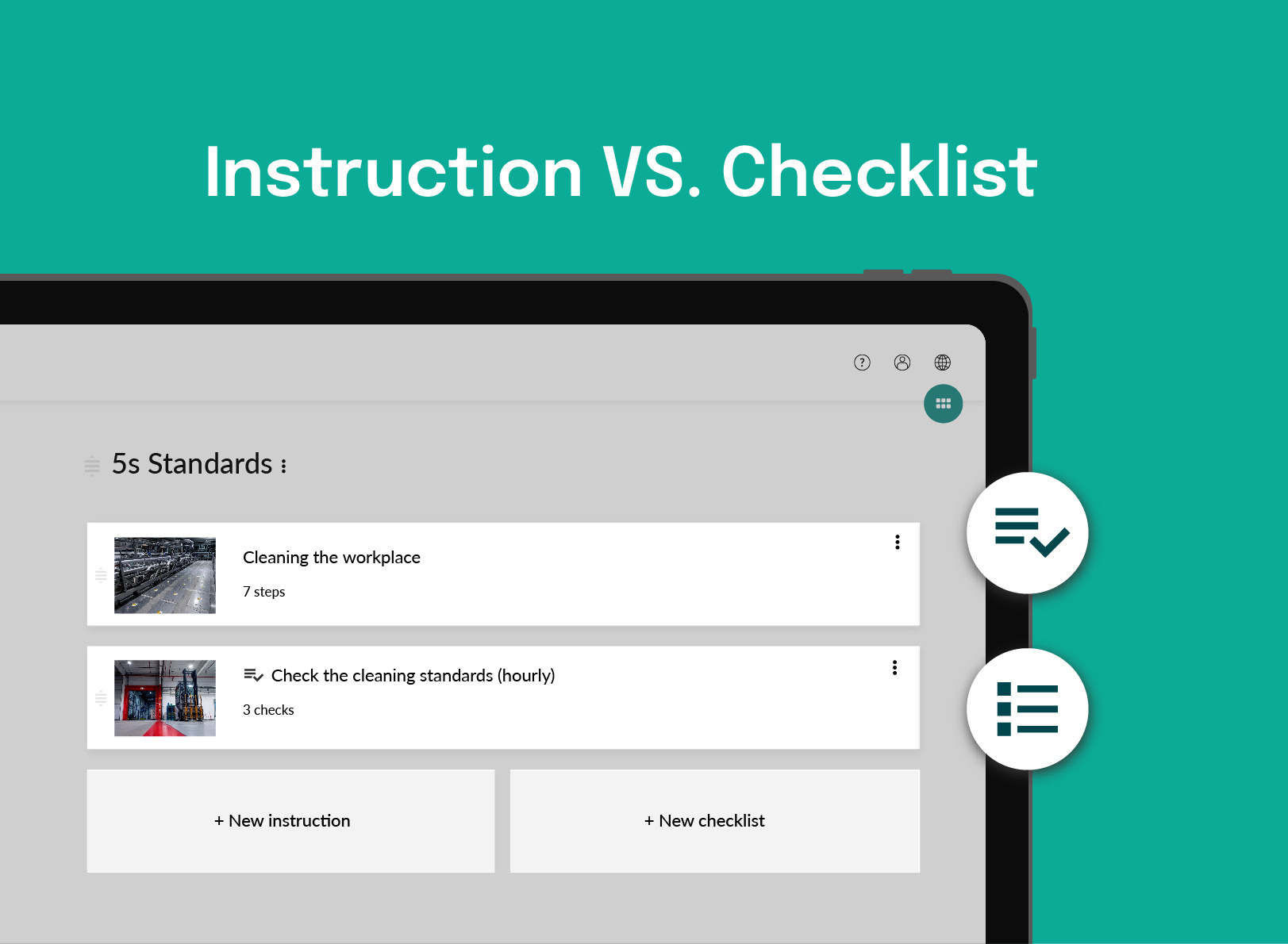
Because isn’t completing a checklist itself a work instruction? Well, yes, there is indeed an overlap in form, as a checklist is essentially a one-step instruction. But their purpose is different and therein lies the key:
- Work instructions help frontline workers to complete tasks according to the defined Standard Operating Procedure (SOP). These SOPs are implemented to meet criteria for quality control and audits.
- Checklists are instructions on how to perform checks to see if the criteria are actually being met. Digital tools - like L2L Shop Floor Execution - provide accurate status reporting at the same time.
Knowing when to choose a checklist is key to achieving clean and effective reporting.
It’s not only business outcomes that benefit from the distinction between instructions and checklists. It boosts confidence and reduces errors for frontline teams when they have a clear view on what’s important to check and how.
The 'Know-How' vs. the 'Show-How'
Experienced workers often don't need to reference "how-to" content like work instructions each time they perform a task. Your processes will always benefit from frontline teams using "did-I-miss-anything" content like checklists each time they perform a task.
Instructions are for learning and reference, while checklists are for daily execution and accountability.
Putting them side by side.
Zooming in, it’s helpful to see both the overlap and the differences at one glance.

Hybrid workflows: When to use both
It can often be effective to use both instructions and checklists within the same workflow. As an operator moves through a routine checklist, a 'No' or 'Fail' on an item should trigger a specific set of work instructions to fix the issue.
By combining the two, you ensure that working through a checklist isn't just a mindless tick-box exercise, but a verified action backed by standardized knowledge.
Feed into the cycle.
Instructions and checklists clearly complement each other. Quality work instructions are step one. Then users can check and report on the adherence to the standards with a checklist.
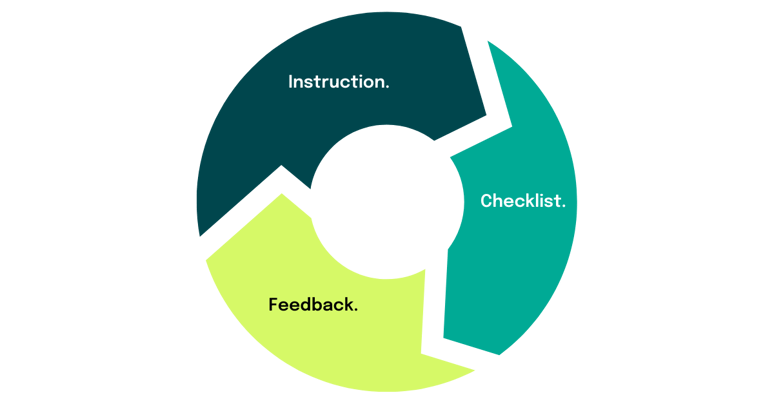
Ideally it becomes a back and forth. A good balance between instructions and checklists promotes accountability and growth. Operators, technicians, and leadership understand where things go wrong and can adapt to prevent further mishaps and ensure compliance.
Turning checklists into audit-ready data
Digital checklists are an invaluable tool that allow manufacturing leaders managers to identify and track patterns of success and failures instantly across different lines, teams, and sites.
Individual checklist data can then inform content management teams about potential maintenance issues, safety hazards, or work instructions that need to be updated or revised.
Companies that implement checklists consistently report that instructions are being used more, leading to improved quality and less downtime overall.
Time to feed the loop.
Learn more about optimizing instruction, checklist, and SOP content:
👉 How to Create the Best Checklist
👉 Safety checklists for frontline teams.
👉 Best Practices: Data Analytics & Visualization in Manufacturing.
Author

Wenda
Wenda uses her experience as an expert technical writer to bring unique insights to her writing. She helps SwipeGuide develop content that clearly explains the inner workings and mechanics of complex manufacturing procedures and processes.
Read author profile